Latest industry news and product updates from Qian Global Co., Limited - your trusted faucet&shower supplier.
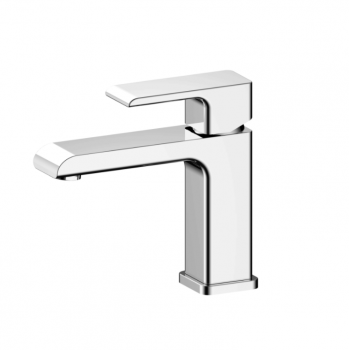
A. During installation, thoroughly remove all impurities from the pipes to prevent damage to the valve core, obstruction, blockage, and leakage. Also, clean the faucet surface promptly to remove any residual building materials.
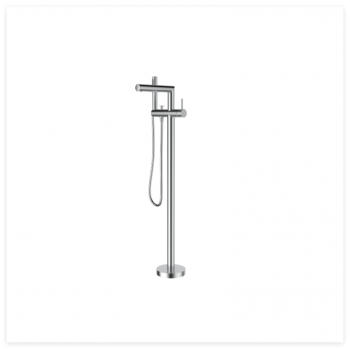
B. For any type of faucet, do not apply excessive force to the handle when opening or closing it; simply twist or turn the handle gently. Faucets with a screened filter should be removed and rinsed after use to remove any impurities. Faucets with hoses should be kept naturally extended to prevent breakage.
C. Frequently wipe the faucet surface with a clean, soft cloth lightly dampened with detergent. Avoid using wire balls or scouring pads with hard particles. Also, avoid impacting the faucet surface with hard objects, which may cause scratches.
D. Newly used faucets may sometimes experience problems such as incomplete closing, leakage, loose handles, or leaking connections. These issues can generally be resolved by consumers themselves. If a faucet with a screw-on rubber seal doesn't close completely, it's usually due to hard debris stuck in the seal. In this case, simply remove the handwheel, unscrew the valve cover, clean any debris around the valve core, and reinstall it to resume normal operation. If a faucet with a ceramic valve core seal doesn't close completely, it could be due to hard debris scratching the sealing surface or insufficient preload on the valve core. If the former is the case, the faucet should be sent to the manufacturer's after-sales service department or a professional repair shop for repair. If the latter is the case, the user simply removes the handle (handwheel) and slightly tightens the valve core.
E. A loose handle (handwheel) generally has two causes: First, it's due to carelessness during assembly; tightening the retaining screws is sufficient. Second, the handle (handwheel) is made of poor quality material. This often occurs due to premature oxidation and corrosion at the connection between the handle (handwheel) and the valve core, increasing the gap. There is generally no remedy. Therefore, avoid low-end faucets whenever possible.
F. If a faucet connection leaks, it's usually due to not tightening it properly during assembly. Simply tighten it. Sometimes, a faucet may function perfectly well in every way, but continue to drip after being turned off. This depends on the duration of the dripping, whether it continues, and the number of drops. Longer dripping episodes can last four or five minutes, with a total of around ten drops. The amount of dripping is equivalent to the amount of water remaining in the faucet spout after the water source is turned off, and this is normal.
G. If the water flow decreases after a period of use, or even the water heater stalls, the faucet filter may be clogged. Gently unscrew the aerator at the faucet outlet, remove the filter cover, and clean out any impurities. This will generally restore the faucet to like-new condition.
H. With proper use and timely maintenance, high-quality, high-end faucets will remain like new for a long time.