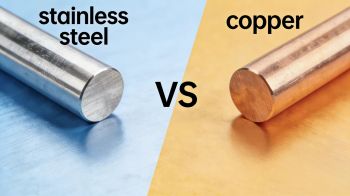
Stainless Steel vs. Copper Faucets: Choosing the Soul of Your Shower
Latest industry news and product updates from Qian Global Co., Limited - your trusted sanitary ware supplier.
When you stand in the aisle of a hardware store or scroll through pages of bathroom fixtures, the choice between a stainless steel and a copper faucet can feel purely aesthetic: do you want mirror-like silver or warm, rosy gold? But this decision goes much deeper than color. You aren't just picking a faucet; you are deciding how your shower will age, how much maintenance you want to do on a Saturday morning, and even how the water feels on your skin.
Here is how to choose the soul of your bathroom.
The Case for Copper: The Living Finish
Copper (and its close relative, brass) is often referred to as a "living" material. Unlike other metals that simply wear out, copper ages. If you are the type of person who loves character—who sees the potential in a leather bag that develops a patina over time—copper is for you.
The Antimicrobial Powerhouse: Scientifically, copper is a superstar. It is one of the few materials with intrinsic antimicrobial properties, meaning it actively works to kill bacteria on its surface between cleanings. For a family concerned with hygiene, this offers a layer of protection that stainless steel simply cannot claim.
The Warmth Factor: Touch a copper faucet in a cold room, and it will feel noticeably warmer and less shocking than stainless steel. This is due to its high thermal conductivity. While this doesn't affect the water temperature inside, it makes the physical interaction more inviting.
The Catch: Copper is "high maintenance" in the best way. To keep that shiny, new penny look, you must polish it regularly. If you don't, it will oxidize and darken. While many high-end designers pay extra for this "weathered" look, if you want a fixture that looks exactly the same in ten years, copper might frustrate you.
The Case for Stainless Steel: The Guardian
If copper is a warm, living companion, stainless steel (specifically grade 304) is the stoic guardian. Its entire purpose is to resist change.
The Invisibility Cloak: The greatest strength of stainless steel is its ability to withstand harsh environments without flinching. In coastal areas where salt spray eats through metal, or in homes with hard water that etches glass and dulls chrome, 304 stainless steel holds the line. It doesn't tarnish, it doesn't patina, and it refuses to rust. It is the set-it-and-forget-it solution.
The Water Purity Advocate: Here is a fact that surprises many: "Copper" faucets are often actually brass, which can contain lead to aid in machining. High-quality stainless steel faucets are generally lead-free and non-toxic, ensuring that the water coming out of your shower is as pure as when it left the pipe.
The Catch: Stainless steel can feel sterile. In a bathroom designed for relaxation, the cold, hard echo of steel might feel more like a surgical theater than a spa. Furthermore, while it is durable, it is a magnet for water spots and fingerprints, showing every single smudge until you wipe it down.
The Verdict: Match the Metal to Your Lifestyle
So, which one wins? It depends on the story you want your bathroom to tell.
Choose Stainless Steel (304 grade) if: You live near the ocean, your water is heavy with minerals, or you simply want a fixture that requires zero chemical cleaners and zero polishing to survive the next decade. It is the rational choice for longevity in a world of hard water.
Choose Copper if: You want your bathroom to feel like a sanctuary. Choose it if you value the experience—the warmth of the metal in your hand, the knowledge that the surface is actively fighting germs, and the beauty of a material that gains character as the years pass.
In the end, a faucet is the hardest working item in your bathroom. Choose the one whose personality matches the effort you are willing to give.